





Dear Old Friend,
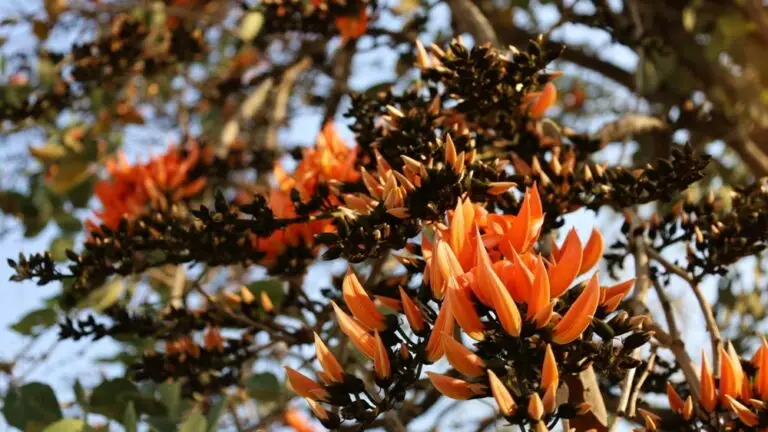
I hope this letter finds you in gentle winds and soft sunshine. Years have passed by, and it has been over a decade since we last wrote. How quickly time flies! With the blink of an eye, things have turned around… but I remain the same Palash which was once planted in the undulating hills, rocky terrain, and tribal heritage of the westernmost part of West Bengal一the Purulia district setting the forest on fire through its vibrant yellow and red petals.
After the chill of winter slowly fades, and the country prepares for renewal, I slowly bloom—my yellow and red flowers seem as red as the fire of hell (people say so) but it provides warmth and represents passion, fertility, and renewal. Even today, I am standing here, being the observer of an everlasting change that has taken place over the years. Sometimes, it feels like only yesterday that I was a little sapling planted by the village messiah.. Indeed, I have been like an ancestor who has seen the world change. I have heard elders reciting fables to their children with great enthusiasm, and the children listening with admiration in their eyes. A legend says that once Prithvi Mata was extremely sorrowful for the lack of colour and life. To cheer her up, the Vayu (God of wind) and the Agni (God of fire), the two deities, worked together. God Vayu blew the wind to carry the Palash seeds while God Agni gifted the Palash tree with his fiery energy. And as the seeds germinated, the earth was lit with its vibrant red-coloured flowers that filled the earth with life and laughter! People regard me as the god of flowers, as my arrival marks the time to thank nature, and pray for prosperity and harmony. From the foot of the Ayodhya Hills, to the artists of Charida who once danced in my shade, I’ve seen lives bloom and dreams fly. I am not being proud but…ehm ehm… even during the Sarhul festival, which celebrates the Sal tree, the tribal community uses my petals to offer to deities, and I embrace the beautiful girls, enhancing their looks as they make tiaras out of my flower. You see how much my existence is celebrated… Even Holi, which marks the victory of good over evil, I become a part of! My dried petals, once crushed into powder, fill the atmosphere with its bright red and yellow, representing the joy, the childish human nature, and the desire to enjoy and live life. Undoubtedly, I am deeply rooted and connected to the bustling city of Purulia. But oh, how the world has spun… My friend, when I think of years that have passed by, I can just recall and recollect the memories of the past—how I was planted with immense love, hope and the desire for change. Indeed, the change has come—once my roots could sense the arrival of footsteps of barefoot children, but today I see them grown up, wearing shoes, playing their roles in the theatre of life.
In the past, there were conversations held under the shade of my leaves, but today there is silence that fills the air. Days seem hectic, and every person is trying to play their roles as effectively as possible. The blooming season of Palash, which once marked the beginning of spring through its fiery red flowers, filled in the sense of birth, the urge to survive, and the willingness to overcome the adversities of life. Today I stand tall, facing the strong winds, the lighter ones, the stormy ones, and the gentle ones … each with its own ability and motive. Today, poets have celebrated me through their works on literature. They regard me as “Palasher phool fote basante/ Aagun-er moto jole uthe,” the petals of the Palash light up like fire. They embrace me through their songs, the dance, and their prayer. During earlier times, people practiced the chhou dance, circling around the tree, and going along with the rhythm of the dhol and the shehnai. At present, the number may be few, but still there is the same joy, they wear the same mask and costumes, but now perform in silence. They may not know the same ancient steps, but their urge to dance makes an exception to the fact. Today what makes it different is that every person tries to participate in the act and not divide themselves due to the great diversity. The winds that once carried flute melodies and the rhythmic beating of the drums now carry the burden of time. Even now my leaves flutter softly as if it is somehow trying to survive time.
Yes, I have seen progress—from incessant chirping that would soothe our ears, to today, the unavoidable noises of cars and machines. I stand in the corner of the community sensing the unattainable desires of people that they carry everyday with themselves. They have shifted away from feelings of love and compassion, and have slowly but significantly moved towards materialism and lust. The atmosphere feels dull and dark. Purulia, which was once a haven where the tribal people lived in harmony, now slowly feels a sting of modernity. Now, the rhythmic sound of the moving leaves and branches has been slowly replaced by the sharp hum of machines. The sound of crickets is no longer heard or admired, be it sunrise or sunset. Everything has been priced either by time or money. Even though the world around us may modernize, these traditions persist. The blooming of Palash becomes a reminder of the deep connection, showcasing the relationship between nature and human, which makes Purulia an everlasting beauty. And yet, despite it all, each spring I bloom—hoping someone will pause, look up, and remember that once, the forest burned not with fire, but with joy. Maybe one day, the winds will carry your reply back to me, my old friend. Maybe… the winds will carry your reply back to me
With petals open,
Palash