
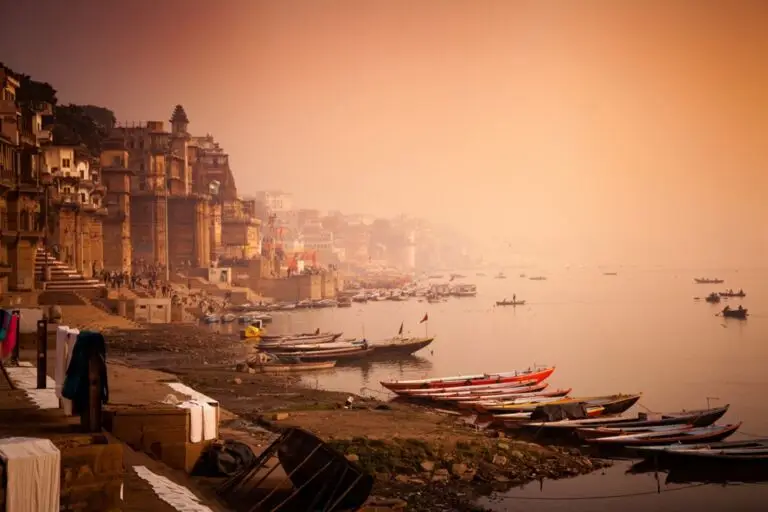
Banaras breathed its ancient rhythm that evening. The Ganga shimmered like molten silver under the setting sun, and the ghats echoed with chants, laughter, and the distant toll of temple bells. We had come as a family, for joy, curiosity, and devotion.
My maternal grandfather, fragile since his brain hemorrhage in 2008, walked beside us, his eyes reflecting wonder and devotion, though memory often betrayed him. We forgot the simplest precaution—placing our hotel’s address in his pocket. In the city of winding alleys and endless ghats, that small oversight became the spark for fear. It happened suddenly. One moment he was beside us, marveling at a floating diya, and the next, he had vanished into the night. Panic gripped my father, and uncle. Our voices, once playful, became urgent calls: ‘Dada! Dada, where are you?’ Banaras, sacred and timeless, now seemed a labyrinth. Shadows stretched unnaturally across the ghats, and every flickering lamp whispered possibility and threat. We moved from ghat to ghat, calling his name. The night wrapped the city in silence, broken only by our frantic steps and prayers. At one ghat, leaning against worn stone steps, my father met a yogi, serene and luminous under the moonlight. His eyes reflected eternity. ‘Every one of you,’ he said softly, ‘is searching for something. Not all searches are for what you see.’ The words puzzled my father, yet they lingered like incense smoke. We pressed on, tracing the winding alleys and silent ghats, aided by compassionate locals, the police, and the auto union, all becoming instruments in the city’s quiet plan.
Hours passed, the city still and expectant. And then, in the tender haze of dawn, we found him—seated calmly at the railway station, clutching a small bundle of offerings he must have collected from temples along the way. Confused but safe, he looked up at us as if seeing not just family but the convergence of fate itself. Relief and gratitude surged, like the river behind him. As we returned him to our hotel, I realized that Banaras had orchestrated the reunion—every ghatsman, every auto, every whispered chant of Baba Vishwanath, a thread weaving us back together. Even the yogi’s words rang true: in searching for him, we had glimpsed more than fear. We had glimpsed ourselves—our devotion, our vulnerability, our humanity. Banaras teaches in silence and shadow.
That night, each ghat felt alive, each step a dialogue between time and memory. In losing him, we were reminded that life is fragile, that love is active, and that faith—sometimes unseen, sometimes unexpected—guides the lost toward safety. Even now, when I close my eyes, I see the ghats in the silver light of dawn. I hear the faint chants of Baba Vishwanath and feel the city’s pulse in my veins. The yogi’s words return to me often: each of us searches for something—peace, redemption, or understanding. Sometimes, it is the search that illuminates the path, not the finding. And in that realization, the night of fear became a story of devotion, courage, and the quiet, miraculous wisdom of Banaras. For in every loss, every fear, the city whispers a truth: what is lost often leads you to discover what you were seeking all along.